Survive the Freeze: Your Complete Detroit Winter Car Prep Checklist
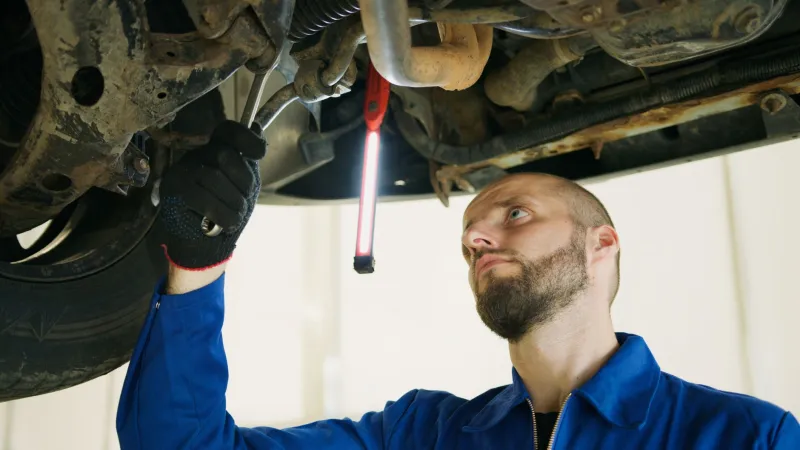
If you've lived in Detroit long enough, you already know the drill. October rolls around, the leaves drop, and before you can say "lake-effect snow," you're white-knuckling it down I-75 in a whiteout. The Motor City doesn't offer a gentle transition into winter — it just shows up, full force, and your car better be ready for it.
At Autoline Detroit, we see the aftermath of unprepared vehicles every single season. Dead batteries, bald tires spinning on ice, brakes that fade in the cold — all of it preventable with a little attention before the temperatures tank. So let's walk through exactly what your car needs before winter officially takes over.
Start With the Battery — Seriously, Start Here
Cold weather is a battery killer, plain and simple. A battery that's running at 80% capacity in September might completely give out when January hits -10°F. Chemical reactions inside the battery slow dramatically in low temperatures, which means it takes significantly more effort to crank a cold engine.
Most car batteries have a lifespan of three to five years. If yours is pushing that upper limit, don't gamble on it making it through another Detroit winter. Bring your vehicle in for a load test — it takes maybe 15 minutes and can save you from being stranded in a parking lot at Comerica Park during a cold snap.
Also check the terminals for corrosion. That white or bluish crust around the cable connections can disrupt the electrical connection and make a borderline battery perform even worse. A quick cleaning can make a real difference.
Tires: Pressure, Tread, and Whether You Should Go Winter-Specific
Here's something a lot of Detroit drivers overlook: for every 10-degree drop in outside temperature, your tire pressure drops by roughly one PSI. That means the tires you had perfectly inflated in September could be noticeably underinflated by the time November arrives. Underinflated tires reduce traction, hurt fuel economy, and wear unevenly.
Check your tire pressure regularly throughout the fall and winter, and always reference the sticker inside your driver's door jamb — not the number stamped on the tire sidewall — for the correct PSI.
On tread depth: if you can stick a quarter into the tread groove and see all of Washington's head, you're getting close to replacement territory. For winter driving on Michigan roads, the more tread the better.
Now, the bigger question — do you need dedicated winter tires? If you drive frequently on unplowed side streets or have a rear-wheel-drive vehicle, the answer is probably yes. Winter tires use a softer rubber compound that stays pliable in freezing temps and feature tread patterns designed specifically to bite into snow and slush. All-season tires are a reasonable compromise for most Detroit drivers, but they're not the same thing as true winter rubber.
Fluids That Keep Your Car Running Through the Cold
Your vehicle runs on a whole ecosystem of fluids, and most of them behave differently when temperatures drop. Here's what to look at:
Antifreeze/Coolant: This is the big one. Your coolant mixture should be roughly 50/50 antifreeze and distilled water to protect your engine down to about -34°F — more than enough for Detroit, but worth verifying. You can pick up an inexpensive tester at any auto parts store, or just bring it in and we'll check it for you.
Oil: Cold, thick oil puts extra strain on your engine at startup. If your vehicle is older or you've been running a heavier-weight oil, consider switching to a lower viscosity option (like 5W-30 instead of 10W-30) that flows more easily in cold temperatures. Check your owner's manual for what's recommended.
Windshield Washer Fluid: Don't cheap out here. Use a fluid rated for below-freezing temperatures — winter-specific formulas are rated to -20°F or lower. Running out of washer fluid on a slushy freeway when salt spray is coating your windshield every 30 seconds is a genuinely dangerous situation.
Brake Fluid: Brake fluid absorbs moisture over time, which lowers its boiling point and can cause spongy pedal feel. If it's been a while since you've had it flushed, winter is a good time to take care of it.
Brakes: No Negotiating on This One
Your brakes are your last line of defense between you and whatever's in front of you on a slick road. Worn brake pads that might feel adequate on dry pavement in July can feel terrifyingly inadequate on an icy Woodward Avenue in January.
Listen for squealing, grinding, or any pulsing when you apply the brakes. Look through your wheel spokes at the rotors — heavy scoring or a deep groove around the edge is a sign they need attention. And if your brake pedal feels soft or spongy, get it looked at immediately.
At Autoline Detroit, a brake inspection is part of our standard pre-winter service check. We'd rather tell you everything looks great than have you find out the hard way that it didn't.
Visibility and Lighting: Don't Forget the Basics
Winter means shorter days, heavy cloud cover, and precipitation that can cut visibility to near zero. Your lighting and visibility systems need to be dialed in.
Replace your wiper blades if they're leaving streaks or skipping across the glass. Consider switching to winter-specific wiper blades with a rubber boot that prevents ice and snow from jamming up the wiper mechanism. Check all your exterior lights — headlights, taillights, turn signals — and replace any that are dim or burned out. If your headlight lenses are yellowed and hazy, a quick restoration kit can dramatically improve how much light actually reaches the road.
Keep an Emergency Kit in the Trunk
Even the best-maintained cars can get stuck. Detroit winters have a way of humbling everyone eventually. Keep a basic emergency kit in your trunk: a blanket, jumper cables or a jump-start pack, an ice scraper and brush, a small bag of sand or kitty litter for traction, a flashlight, and some basic tools. If you're ever stuck on the shoulder of I-96 in a snowstorm, you'll be very glad it's back there.
Book Your Pre-Winter Service Before the Rush
Every year, the weeks before the first major snowfall see a surge in service appointments across the Detroit metro. Don't wait until the last minute and end up scrambling. Getting your pre-winter checkup done in October means you're ahead of the crowd and ready when the weather turns.
Swing by Autoline Detroit, give us a call, or book online — we'll go through everything on this list and make sure your vehicle is as ready for a Detroit winter as it can possibly be. Because around here, being prepared isn't just smart. It's survival.