Michigan Roads Are Eating Your Car Alive — Here's What Every Detroit Driver Needs to Know
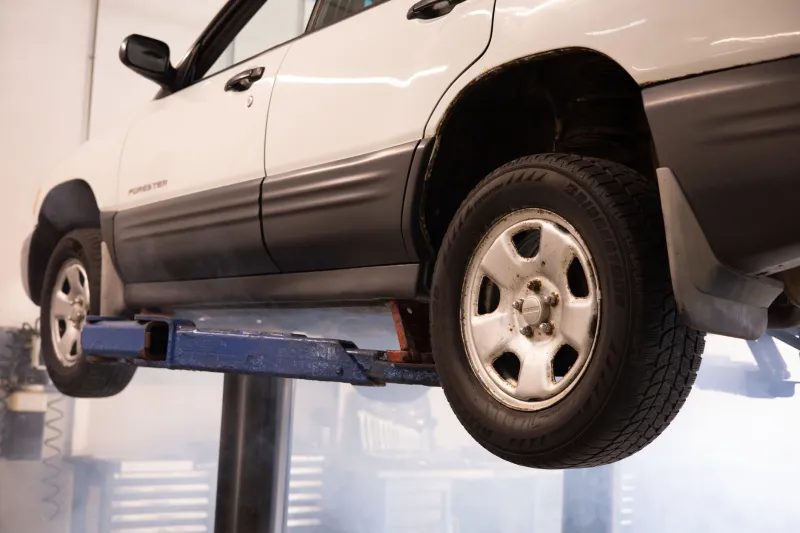
If you've lived in Detroit long enough, you already know the feeling. You're cruising down a familiar stretch of road, maybe heading up Gratiot or cutting through a side street in Hamtramck, and then — thud. A pothole the size of a birdbath swallows your front wheel whole. You wince. You check the steering. You keep driving and try not to think about it.
But your car is thinking about it. And eventually, your wallet will too.
Michigan consistently ranks among the worst states in the country for road quality, and Metro Detroit takes the brunt of it. The freeze-thaw cycle that hammers pavement from November through March turns hairline cracks into craters practically overnight. And while the city and state chip away at repairs, the roads are never quite fixed before the next winter comes along to undo everything.
The result? Detroit drivers are quietly paying a premium just to operate their vehicles — and most of them don't even realize it until something breaks.
What's Actually Happening to Your Car
A pothole hit isn't just a bump. Depending on the depth, your speed, and the angle of impact, that jolt sends a shockwave through your entire front-end system. Here's what's absorbing that energy:
Tires and wheels take the first hit. A sharp pothole edge can pinch the tire sidewall between the rim and the road surface, causing what's called a sidewall bubble or blowout. Rims — even steel ones — can bend or crack on impact. We're talking anywhere from $150 to $600+ per wheel, depending on your vehicle.
Struts and shocks are next in line. These components are designed to handle road irregularities, but repeated hard impacts accelerate wear significantly. A strut replacement runs $300–$700 per axle at most Detroit shops, and if you're driving something European or luxury, you can double that number.
Alignment gets knocked out of spec constantly around here. When your alignment is off, your tires wear unevenly, your fuel economy drops, and your steering pulls to one side. A basic alignment costs $75–$150, but if you're hitting potholes every week, you're fighting a losing battle.
Ball joints, tie rods, and control arm bushings are the longer-term casualties. These components handle the lateral and rotational forces of your suspension. Repeated pothole abuse speeds up wear on all of them. By the time you notice the clunking or loose steering feel, you're often looking at $400–$1,200 in repairs depending on what's failed.
Add it all up over a year of Detroit driving, and it's not unusual for a vehicle owner to spend $800–$2,000 in road-damage-related repairs — without ever being in an accident.
Warning Signs You Shouldn't Ignore
Your car will usually tell you when something's wrong after a pothole hit. The problem is that drivers tend to dismiss subtle symptoms until they get worse. Here's what to watch for:
- Pulling to one side while driving on a straight road — this is almost always an alignment issue
- Vibration in the steering wheel, especially at highway speeds — could be a bent rim or unbalanced tire
- A visible bulge or bubble on the tire sidewall — do not keep driving on this; it's a blowout waiting to happen
- Clunking or knocking sounds when going over bumps — often a worn ball joint or strut
- Uneven tire wear — look at the inside and outside edges; if one is wearing faster, your alignment is off
- Car sitting lower on one corner — a collapsed spring or blown strut can cause this
If you hit a particularly nasty pothole, it's worth having a tech do a quick inspection even if nothing feels immediately wrong. Some damage is structural and doesn't make noise right away.
What You Can Do to Protect Yourself
You can't avoid every pothole in Detroit — that's just reality. But there are things you can do to reduce the damage.
Watch your tire pressure. Underinflated tires are far more vulnerable to pothole damage. The sidewall flexes more, and there's less cushion between the rim and the road. Check your pressure monthly, especially as temperatures drop in fall.
Slow down when you can't avoid it. If a pothole is unavoidable, taking it at a slower speed dramatically reduces impact force. Hitting a 4-inch pothole at 15 mph is a very different experience than hitting it at 40.
Don't brake mid-pothole. This one surprises people. Braking while your tire is in the pothole actually compresses the suspension and increases the impact on your rim and strut. If you see it coming late, brake before you hit it, then release as you go through.
Upgrade if your budget allows. If you're shopping for tires, look at options with reinforced sidewalls. Some all-season tires marketed for rough conditions offer noticeably better resistance to pothole damage.
Get a regular alignment check. Once or twice a year is reasonable for Detroit drivers — more if you're noticing symptoms. Catching it early prevents the uneven tire wear that costs you a whole set of tires before they should be replaced.
Documenting Damage for a Claim
Here's something a lot of Detroit drivers don't know: you can file a claim with the Michigan Department of Transportation or the City of Detroit for pothole damage — and sometimes it actually pays out.
The process isn't fast or guaranteed, but it's worth doing if the damage is significant. Here's how to approach it:
- Document the pothole immediately. Take photos and note the exact location — street name, cross street, any nearby landmarks. Get the date and time.
- Get your vehicle inspected and the damage documented in writing. You need a repair estimate or invoice from a shop that clearly describes the damage. Vague descriptions won't hold up.
- File a claim promptly. For city roads, file with the City of Detroit's Claims Division. For state roads, contact MDOT. There are deadlines — typically 60 days for city claims — so don't sit on it.
- Keep records of everything. Photos, repair invoices, your claim submission, any correspondence. If the claim is denied, you can escalate or consult an attorney.
Successful claims tend to involve potholes that were previously reported and not repaired, or damage that's clearly documented and tied to a specific location. It's not a slam dunk, but people do get reimbursed.
The Bottom Line
Detroit drivers already deal with a lot — insurance rates, winter weather, and a commute that tests everyone's patience. The last thing you need is your car quietly falling apart underneath you because of roads that should have been fixed years ago.
Stay on top of your tire pressure, pay attention to how your car is behaving, and don't let small symptoms slide. And if you're hearing something you don't recognize or your steering just doesn't feel right, bring it in. At Autoline Detroit, we know these roads as well as you do — and we know exactly what they do to your vehicle. A quick inspection now is almost always cheaper than the repair you'll face if you wait.