The One Belt That Runs Everything — and Why Detroit Drivers Keep Ignoring It Until It's Too Late
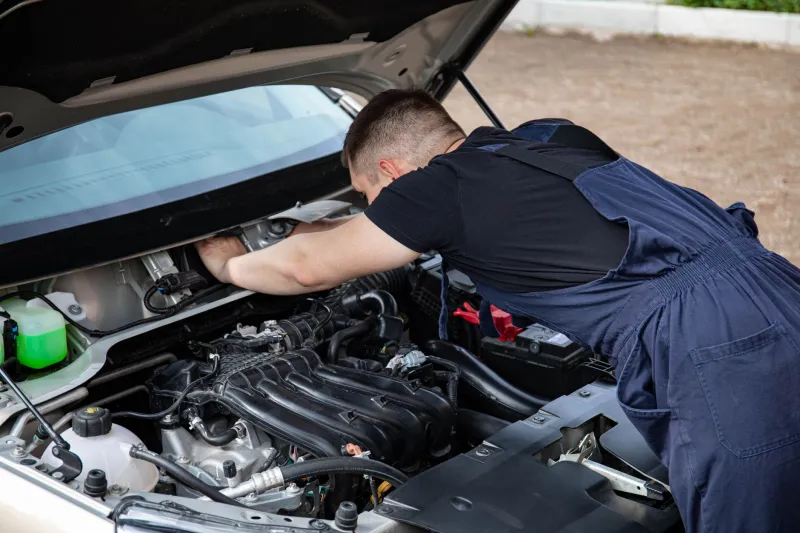
Here's a scenario that plays out more often than it should on Detroit roads: a driver is cruising down I-75 on a January morning, heat blasting, radio on, and then — out of nowhere — everything goes wrong at once. The power steering locks up, the battery light floods the dash, the temperature gauge spikes, and the car limps to the shoulder in a cloud of steam. One tow truck and one very unhappy mechanic later, the diagnosis is almost embarrassingly simple: the serpentine belt snapped.
The frustrating part? In almost every case, there were warning signs. They just went unnoticed — or unrecognized — for months.
So What Exactly Is a Serpentine Belt?
If you've ever popped the hood and noticed a long, flat, ribbed rubber belt winding its way around a series of pulleys, that's your serpentine belt. Unlike older vehicles that used multiple individual belts for different systems, most modern cars built in the last 30 years use one continuous belt to drive the alternator, power steering pump, air conditioning compressor, water pump, and sometimes the power brakes — all at once.
That's a lot of responsibility sitting on one piece of rubber.
The belt gets its name from the snake-like path it takes around the engine's accessory pulleys. It's driven by the crankshaft, which means every time your engine runs, that belt is spinning. Thousands of rotations per minute, hour after hour, year after year. Over time, the rubber compounds break down, the belt stretches, small cracks form, and eventually — it gives.
How Deterioration Actually Happens
Rubber doesn't fail dramatically at first. It fails gradually, and that's exactly what makes serpentine belt wear so easy to overlook.
In the early stages, the belt develops tiny surface cracks — usually on the underside where the ribs contact the pulleys. These micro-cracks don't affect performance right away, but they're a clear sign the material is losing its elasticity and tensile strength. Heat accelerates this process significantly, and anyone who's driven a Michigan summer knows our engines run hot.
As the belt ages further, the ribs start to fray, the edges can split, and the belt may begin to slip slightly on the pulleys. That slippage is what causes the squealing noise a lot of drivers chalk up to "just something the car does now."
Eventually, one of two things happens: the belt snaps completely, or it slips off a pulley and stops driving accessories. Either way, you're stranded.
Warning Signs You Can Actually Catch
The good news is that a serpentine belt rarely fails without giving you some advance notice. The bad news is that those notices are easy to dismiss if you don't know what you're listening or looking for.
Squealing or chirping from under the hood. This is probably the most common symptom, and it tends to get louder when you first start the car or when you crank up the AC. It's not always the belt — a misaligned tensioner or a seized pulley can cause the same sound — but any persistent squealing from the engine bay deserves a closer look.
Power steering that feels heavy or inconsistent. If your steering suddenly feels stiffer than usual, especially at low speeds, the belt may be slipping and not fully driving the power steering pump. Don't ignore this one.
Battery or charging system warning lights. If the alternator isn't spinning at full capacity because the belt is slipping, your battery won't charge properly. That warning light isn't always about the battery itself.
AC that suddenly stops cooling well. The AC compressor is belt-driven. A deteriorating belt can reduce compressor efficiency before it fails entirely.
Visible cracking or glazing on the belt itself. If you can safely see the belt with the engine off, look for cracks, fraying on the edges, a shiny or glazed appearance on the ribbed surface, or any chunks missing. Any of these means replacement is overdue.
The Real Cost Comparison — and It's Not Even Close
This is where it gets important for your wallet.
A serpentine belt replacement at a reputable Detroit service center typically runs somewhere between $75 and $200 depending on your vehicle, including parts and labor. It's a straightforward job that usually takes under an hour.
Now compare that to what happens when the belt fails on the road.
If the water pump is belt-driven on your vehicle (common on many models), losing the belt means losing coolant circulation. Engines can overheat and sustain serious damage in minutes. A blown head gasket repair starts around $1,500 and can climb well past $2,500 depending on the extent of the damage. Engine replacement? You're looking at $4,000 to $8,000 or more.
Add in a tow truck ($100–$200), potential rental car costs while your vehicle is in the shop for days, and the stress of being stranded — possibly in the middle of a Detroit winter — and that $150 preventive replacement starts looking like the deal of the century.
We see this math play out at our service bays more than we'd like. It's not a scare tactic. It's just what happens when a simple maintenance item gets pushed to the back burner one too many times.
When Should You Actually Replace It?
Most manufacturers recommend inspecting the serpentine belt every 30,000 miles and replacing it somewhere between 60,000 and 100,000 miles. But those are general guidelines — the actual condition of your belt matters more than the mileage alone.
Here's a practical inspection schedule to keep in mind:
- Every oil change: Ask your technician to visually check the belt. It takes 30 seconds and costs nothing.
- At 60,000 miles: Even if the belt looks okay, have a qualified technician assess the tension and check the tensioner and idler pulleys. Worn pulleys can destroy a new belt quickly.
- At 90,000 miles: If you haven't replaced it yet and you're still on the original belt, seriously consider proactive replacement regardless of appearance — especially if you're planning a road trip or heading into winter.
- Anytime you notice symptoms: Don't wait for the scheduled interval. If you're hearing noise or feeling changes in steering or charging, get it looked at now.
Don't Forget the Tensioner
One thing worth mentioning: when a serpentine belt is replaced, it's smart to also inspect — and often replace — the belt tensioner and idler pulleys at the same time. These components wear out on a similar timeline, and putting a fresh belt on a worn tensioner is a little like buying new tires and ignoring a bent wheel. Labor costs overlap significantly, so doing it all at once saves money in the long run.
The Bottom Line
The serpentine belt isn't glamorous. It doesn't get the attention that brakes or tires do, and most drivers couldn't pick it out of a lineup. But it's one of the most critical components on your vehicle, and it's one of the cheapest things to maintain proactively.
If you genuinely don't know when yours was last inspected or replaced, that's your cue. Swing by and let us take a look — it's a quick check, and the peace of mind is absolutely worth it. Detroit roads are tough enough without adding a preventable breakdown to the mix.