Your Transmission Fluid Is Quietly Killing Your Car — Here's What Detroit Mechanics Want You to Know
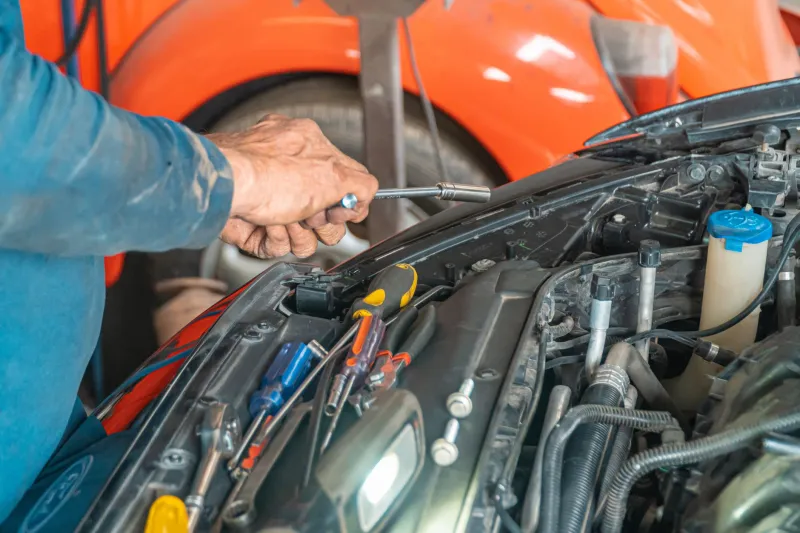
Everybody in Detroit knows to get their oil changed. It's practically a rite of passage — you pull into the shop, grab a bad cup of coffee, and twenty minutes later you're back on the road. Easy. But ask most drivers when they last had their transmission fluid serviced, and you'll get a blank stare. Maybe a shrug. Maybe a nervous laugh.
That's a problem. A really expensive one.
Transmission fluid is one of those things that doesn't scream for attention the way a dead battery or a flat tire does. It degrades slowly, quietly, and without much drama — right up until the moment it doesn't. And when a transmission finally gives out, the repair bills don't mess around. We're talking anywhere from $1,500 for a basic fix to well over $4,000 for a full rebuild or replacement. That's a number that hurts no matter what you're driving.
So let's talk about what's actually going on inside your transmission, why the fluid matters more than most people realize, and how to spot trouble before it turns into a catastrophe.
What Transmission Fluid Actually Does
Here's the thing most drivers don't fully appreciate: your transmission is doing an enormous amount of work every single time you drive. It's managing gear shifts, transferring power from the engine to the wheels, and keeping dozens of precision-machined components from grinding themselves into dust. Transmission fluid is what makes all of that possible.
It lubricates moving parts, helps regulate temperature, and in automatic transmissions, it also acts as a hydraulic fluid — meaning it's physically responsible for making your gear shifts happen. Fresh fluid is typically a bright red or pinkish color and has a slightly sweet smell. It's formulated to handle extreme heat and pressure.
But over time, that fluid breaks down. Heat cycles, friction, and contamination from metal particles all degrade its effectiveness. What started as a clean, capable lubricant slowly turns into a dark, sludgy mess that can't do its job properly. And when the fluid fails, the transmission isn't far behind.
Why Detroit Roads Make This Worse
Let's be real — driving in Detroit isn't exactly gentle on vehicles. Between the pothole-riddled surface streets, the stop-and-go traffic on I-75 and I-94, and the temperature swings we deal with from January through March, our cars are working harder than average.
Heavy city driving actually accelerates transmission fluid breakdown faster than highway miles do. Every time you're crawling through traffic or navigating around construction on Woodward, your transmission is cycling through more gear changes and generating more heat than it would on a smooth highway cruise. If you're mostly doing city driving — and most of us are — your fluid may need attention sooner than the factory schedule suggests.
The Warning Signs You Shouldn't Ignore
Transmission trouble rarely shows up all at once. It builds gradually, and if you know what to look for, you've got a real shot at catching it early.
Delayed or rough shifting is usually one of the first things drivers notice. If your car hesitates before engaging a gear, or if shifts feel jerky or harsh instead of smooth, that's your transmission telling you something's off. Don't chalk it up to "just how the car drives" — get it looked at.
Slipping gears are harder to miss. This is when the engine revs up but the car doesn't accelerate the way it should, almost like the transmission is momentarily losing its grip. It's an unsettling feeling, and it's a serious red flag.
A burning smell coming from under the hood or beneath the car can indicate that your transmission fluid is overheating. Degraded fluid loses its ability to manage heat, and when things get too hot, components start to suffer damage.
Unusual noises — whining, humming, or clunking sounds during acceleration or gear changes — can also point to fluid-related issues. Healthy transmissions are largely silent. If yours is talking to you, listen.
Dark or dirty fluid is something you can actually check yourself. Many vehicles have a transmission dipstick (though some newer models don't — check your owner's manual). If the fluid on the dipstick looks dark brown or black instead of red, or if it smells burnt, it's overdue for a change.
The Price Gap Is Real — and It's Brutal
This is where the math gets sobering. A routine transmission fluid service at a reputable Detroit shop typically runs somewhere between $100 and $200 depending on your vehicle and whether it's a drain-and-fill or a full flush. It's quick, it's straightforward, and it's something most shops can knock out in under an hour.
A transmission rebuild? That's a completely different conversation. Depending on the vehicle and the extent of the damage, you could be looking at $2,500 on the low end and $5,000 or more for complex jobs on trucks, SUVs, or European makes. Some transmission replacements on newer vehicles push even higher than that.
The brutal part is that most catastrophic transmission failures are preventable. They don't just happen out of nowhere — they build up over thousands of miles of neglected fluid. That $150 service call you kept putting off has a very real chance of becoming a repair that costs more than the car is worth.
How Often Should You Actually Change It?
This varies more than you'd expect. Some manufacturers recommend transmission fluid changes every 30,000 to 60,000 miles. Others claim their fluid is "lifetime" — a term that sounds great until you talk to any experienced mechanic who'll tell you it really means "the lifetime of the warranty, not the car."
A good rule of thumb for Detroit drivers doing mostly city miles: have your transmission fluid inspected every 30,000 miles and changed by 60,000 at the latest. If you tow, haul heavy loads, or drive in a lot of stop-and-go traffic, err on the earlier side. And if you bought a used vehicle and don't know the service history, just get it done — the peace of mind alone is worth the cost.
Don't Wait for the Warning Light
Here's an uncomfortable truth: by the time your check engine light comes on for a transmission issue, you may already be dealing with damage that's past the point of a simple fluid change. Transmission problems are much easier and cheaper to address in their early stages.
The smartest move is to be proactive. Next time you're in for an oil change or a tire rotation, just ask your service advisor to check the transmission fluid condition. It takes minutes, it costs nothing extra, and it could save you thousands of dollars down the road.
At Autoline Detroit, we see this story play out all the time — a driver comes in with a rough-shifting transmission, hoping for a simple fix, and walks out with a repair estimate that changes their whole week. The drivers who avoid that scenario aren't lucky. They're just paying attention.
Your transmission works hard for you every single day. Give it the same consideration you give your oil, and it'll return the favor for a long, long time.