The Noise That Vanishes: How to Actually Catch a Mystery Rattle Before Your Next Shop Visit
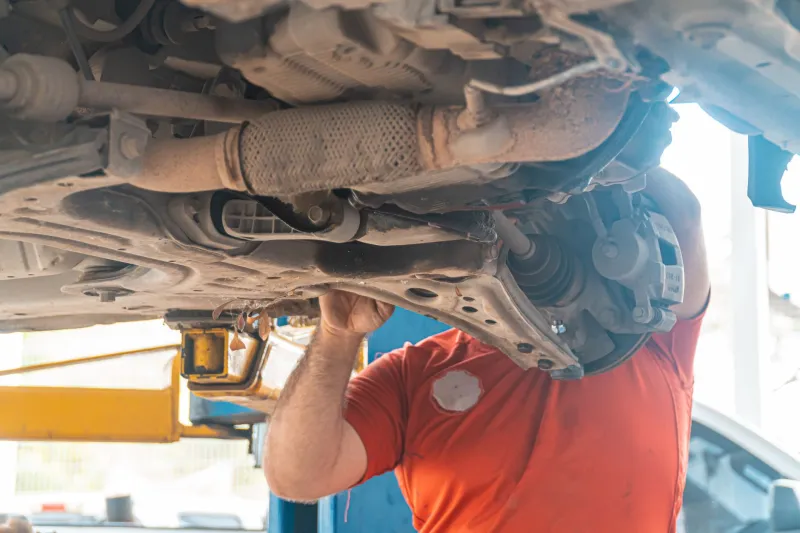
You know the feeling. There's a tick, a clunk, or a rattling shimmy that follows you every single morning on your drive to work. It's maddening. You book an appointment, you drive to the shop, and then — silence. The mechanic rides along, gives the car a good shake, and looks at you with that polite but slightly skeptical expression. Nothing.
It's not that your mechanic is bad at their job. It's that mystery rattles are genuinely one of the hardest automotive problems to diagnose. Detroit roads don't make it any easier, either. Between the frost heaves, the pothole-riddled side streets, and the temperature swings that go from 10°F to 60°F inside of a week, cars around here take a beating that loosens, cracks, and fatigues components in ways that don't always show up on a lift.
So let's talk about how to actually track one of these ghosts down.
Why Rattles Play Hide-and-Seek with Mechanics
The core problem is that most rattles are condition-dependent. They only show up when a specific combination of speed, temperature, road surface, and load is present. Your mechanic might drive your car at 40 mph on a smooth test road while your rattle only happens at 27 mph over the cracked concrete on your particular street.
Temperature is a huge factor, especially in Michigan. Metal expands and contracts, plastic clips shrink in the cold, and rubber bushings that are stiff and noisy at 20°F become perfectly compliant once the car warms up. By the time you've driven to the shop, the car has had time to settle, warm, or shift — and the noise disappears.
Older vehicles are especially prone to this. A car with 80,000-plus miles has had years of thermal cycling, vibration, and road stress working on every fastener, bushing, and plastic clip in the cabin. Things loosen gradually. A rattle that seems to come from "somewhere in the dash" might actually be a dried-out HVAC duct that only vibrates at a specific engine RPM.
Common Culprits in Detroit-Area Vehicles
Before you start your detective work, it helps to know the usual suspects. Here's where rattles tend to hide in cars that have spent a few winters in Southeast Michigan:
Worn suspension bushings and sway bar end links — The roads around here chew through suspension components faster than almost anywhere else in the country. A worn bushing will clunk over bumps and often sounds like it's coming from inside the car when it's actually underneath it.
Loose heat shields — The metal shields around your exhaust system are held on with small bolts and clips that corrode and fail. When one comes loose, it vibrates against the exhaust pipe and produces a tinny rattle that changes with engine speed. This is incredibly common and surprisingly easy to fix.
Dashboard and trim panel clips — UV exposure, temperature swings, and years of vibration cause plastic retaining clips to crack or pop free. Loose trim around the A-pillar, door panels, or the center console can produce rattles that sound like they're coming from somewhere completely different.
Trunk and cargo area loose items — Don't overlook the obvious. A forgotten ice scraper, a rolling bottle of washer fluid, or even a loose spare tire jack can rattle convincingly enough to make you think something is seriously wrong.
Strut mounts and top hats — When these wear out, you'll often hear a clunk or knock when turning at low speeds or going over dips. Detroit winters accelerate this wear significantly.
Your Pre-Visit Diagnostic Checklist
The goal here is to gather as much specific information as possible before you talk to a technician. Think of yourself as the first responder — your job is to document, not necessarily diagnose.
1. Record it. Pull out your phone and record a video the next time the noise happens. Keep your phone mounted or have a passenger hold it. Even a muffled recording gives a mechanic something to work with — they can hear whether it's a rattle, a knock, a squeak, or a groan, and that narrows things down considerably.
2. Note the exact conditions. Speed, road surface, temperature, whether the car is cold or warmed up, whether you're turning or going straight, whether it happens over bumps or on smooth pavement — all of this matters. Write it down. Mechanics love specifics and they can work a lot faster when you say "it happens between 25 and 35 mph on rough pavement when the car is cold" versus "it makes a noise sometimes."
3. Try to isolate the location. Have a passenger sit in different seats while you drive your usual problem route. A sound that seems to come from the dash might actually be behind the rear seat. Have them press gently on panels and trim pieces while you drive — sometimes that's enough to temporarily stop a rattle and identify the source.
4. Test different variables deliberately. Does it happen with the radio off? (Sometimes vibration from speakers masks other noises, or vice versa.) Does it change when you turn the steering wheel slightly? Does it stop when you hit the brakes? These clues point toward very different systems.
5. Check the easy stuff first. Open the trunk and look around. Check your glove box — close it completely and see if the noise changes. Make sure your license plate is tight. These sound like obvious things, but you'd be surprised how many "mystery rattles" are solved in the parking lot before anyone touches a wrench.
How to Talk to Your Mechanic About It
Once you've done your homework, the conversation at the shop becomes a lot more productive. Lead with the conditions, not the sound. Instead of "it rattles," try: "It rattles at low speeds on rough pavement when the car is cold, seems to come from the front left, and goes away once I'm up to highway speed."
Ask if a technician can ride along on your actual commute route. Most shops will accommodate this, especially if you explain that the problem is condition-specific. Your pothole-riddled neighborhood road is going to reproduce the issue a lot faster than a smooth test loop.
If they can't replicate it during the visit, ask them to document what they checked and ruled out. That way, next time you come in — or if the noise gets worse — you're building a history instead of starting from scratch.
At Autoline Detroit, we hear this kind of story constantly. A customer drives in, the car behaves perfectly, and everyone goes home frustrated. But the customers who come in with notes, recordings, and a clear description of when and where the noise happens? Those are the ones who actually get answers.
Rattles aren't always serious, but they're rarely random. With a little patience and some methodical observation, you can give your mechanic the information they need to actually find the thing — and finally drive in peace.