Skipping Oil Changes Is Costing Detroit Drivers Way More Than They Think
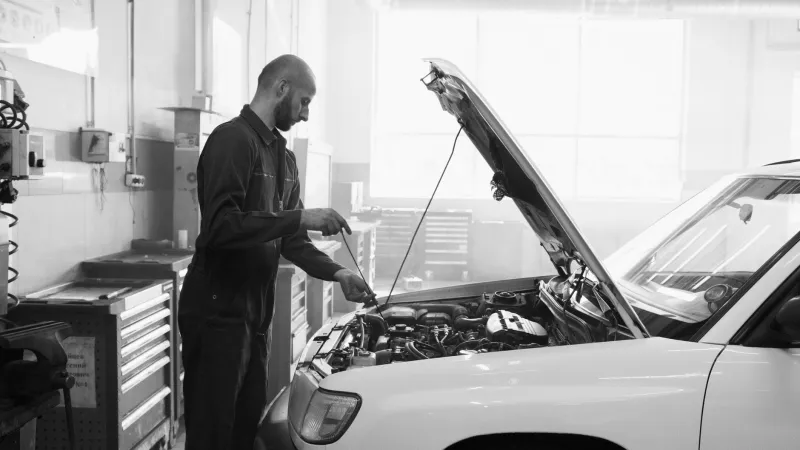
Let's be honest. Life in Detroit moves fast. Between work, family, and everything else pulling at your schedule, swinging by the shop for an oil change or a tire rotation can feel like a low priority. It's easy to tell yourself it can wait another few weeks. Then a few weeks becomes a few months. Then you're sitting in a waiting room getting quoted four grand for an engine repair that started as a $60 maintenance item.
We've seen it happen more times than we can count here at Autoline Detroit. So we decided to put together a real, no-fluff breakdown of what deferred maintenance actually costs — pulled straight from conversations with local mechanics who deal with this stuff every single day.
The Oil Change Problem: Small Neglect, Big Consequences
Oil changes are probably the most talked-about maintenance task, and yet they're still the most commonly skipped. Here's the thing — motor oil doesn't just lubricate your engine. It clears out heat, carries away tiny metal particles, and prevents the kind of buildup that slowly destroys engine components.
When you go too long between changes, that oil breaks down. It thickens, loses its ability to flow properly, and starts leaving deposits on critical engine parts. Over time, you're looking at sludge buildup that can clog oil passages and starve your engine of lubrication.
The result? Premature wear on pistons, camshafts, and bearings. In worst-case scenarios — and Detroit mechanics see these worst cases regularly — you're dealing with complete engine failure. A new or rebuilt engine can run anywhere from $4,000 to $10,000 depending on your vehicle. Compare that to an oil change that typically costs $50 to $100 at a reputable shop, and the math gets pretty uncomfortable pretty fast.
The rule of thumb: Follow your manufacturer's recommendation, which for most modern vehicles is somewhere between 5,000 and 7,500 miles. If you're driving an older model or doing a lot of stop-and-go city driving — which, if you're on I-75 or the Lodge during rush hour, you definitely are — lean toward the shorter interval.
Tire Rotations: The One People Love to Skip
Tire rotations feel optional. They kind of seem like something shops push just to get you in the door. But here's what's actually happening when you skip them: your tires wear unevenly. Front tires on front-wheel-drive vehicles — which is most cars on the road — carry the braking and steering load, so they wear down significantly faster than the rear tires.
Skip enough rotations and you end up replacing two tires early instead of getting the full life out of all four. A set of decent all-season tires for a mid-size sedan runs $400 to $700 installed. If uneven wear means you're replacing them 15,000 miles early, that's real money walking out the door.
Beyond the cost, uneven tires affect handling and braking — especially critical during Michigan winters when roads are slick and stopping distances already stretch out. This is one of those services that's genuinely hard to justify skipping.
Fluid Checks: The Invisible Maintenance Nobody Thinks About
Brake fluid. Transmission fluid. Coolant. Power steering fluid. These don't get nearly the attention they deserve, partly because most drivers never see them and don't know to ask about them.
Take brake fluid as an example. It's hygroscopic — meaning it absorbs moisture from the air over time. As it does, its boiling point drops. Push your brakes hard coming down a hill or in a panic stop, and degraded brake fluid can actually boil, causing a spongy pedal or outright brake fade. That's not a comfort issue. That's a safety issue.
Transmission fluid is another big one. Automatic transmissions are intricate, heat-sensitive systems that depend on clean fluid to function properly. Run dirty or low fluid long enough and you're looking at a transmission rebuild — easily $2,500 to $4,500 — or a full replacement that can top $6,000.
Most of these fluid services cost between $80 and $200. The math, again, is not subtle.
What Can Actually Wait (Sometimes)
Now, we're not here to scare you into spending money unnecessarily. Some services are more flexible than others, and a good mechanic will tell you the same.
Air filters, for instance, can often go a bit longer than the manufacturer's suggested interval if you're not driving in particularly dusty conditions. Cabin air filters are even more forgiving — they affect your HVAC system comfort but won't cause mechanical damage if you stretch the interval a little.
Battery checks are worth doing annually, especially before Michigan winters hit, but if your battery is relatively new and showing no symptoms, it's not something you need to rush in for out of cycle.
Wiper blades are easy to assess yourself. If they're streaking or skipping, swap them out. If they're still clearing the windshield cleanly, you've got time.
The key distinction is this: services that protect major mechanical systems — engine, transmission, brakes, cooling — are the ones you don't want to play games with. Services that affect comfort or minor performance can have a little more flexibility.
The Real Financial Picture Over Five Years
Let's look at this from a longer view. Say you own a vehicle for five years and consistently skip or delay routine maintenance. Here's a rough picture of what that could cost you compared to keeping up with it:
- Staying current on maintenance: Roughly $1,500 to $2,500 over five years depending on your vehicle and mileage.
- Dealing with the fallout from skipped maintenance: Anywhere from $3,000 on the low end to well over $10,000 if you hit a major engine or transmission failure.
And that's before you factor in the resale value hit. A vehicle with documented, consistent maintenance history commands noticeably more on the used car market. Buyers — and dealers — can spot a neglected vehicle, and they price it accordingly.
A Word From the Shop Floor
Mechanics here in Detroit will tell you the same thing over and over: the customers who end up with the biggest repair bills are almost never the ones who drove recklessly or bought bad cars. They're regular people who just kept putting off the basics.
It's not about being a car enthusiast or knowing everything under the hood. It's about treating your vehicle like the significant investment it is — because for most Detroit families, it absolutely is one.
The shop is here when you need us. But the goal is always to keep you out of the waiting room as much as possible. Stick to your maintenance schedule, ask questions when something seems off, and don't let that nagging feeling that something's not quite right go ignored for another few weeks.
Your future self — and your bank account — will thank you.