Waiting on Brake Work Is Quietly Draining Your Wallet — Here's the Real Math
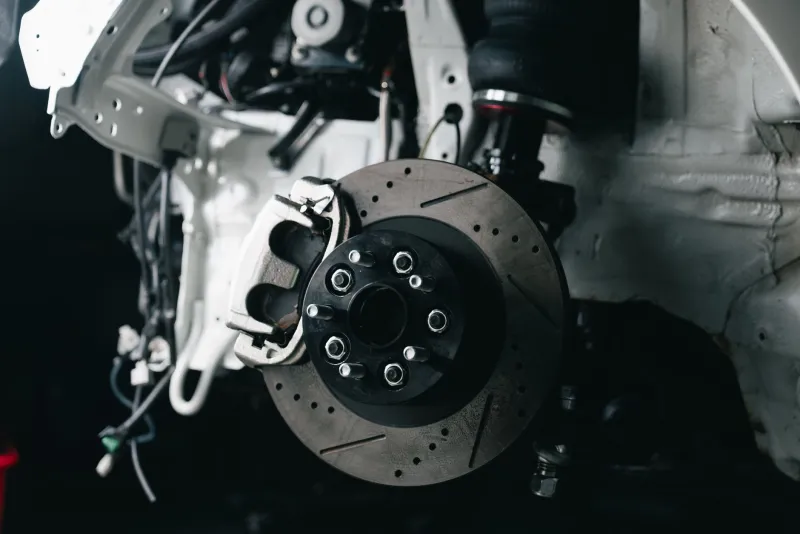
There's a particular kind of optimism that lives in every driver who hears a faint squeal from their brakes and thinks, it'll probably go away on its own. We've seen it a thousand times here in Detroit. The roads are rough, the winters are brutal, and nobody wants another repair bill. So people wait. And waiting, it turns out, is almost always the more expensive choice.
Let's talk about what's actually happening when you delay brake service — and what it ends up costing you compared to catching the problem early.
What Brake Pads Actually Do (And Why Timing Matters So Much)
Brake pads are designed to wear down gradually. That's by design. They're the sacrificial layer between your caliper and your rotor — two components that are significantly more expensive to replace. Most pads have a built-in wear indicator, a small metal tab that starts squealing when the pad material gets thin. That squeal is your first warning. It's not an emergency yet, but it's the clock starting.
Ignore that squeal long enough and the pad wears completely through. Now metal is grinding directly against your rotor. At that point, you're not just replacing pads anymore.
The Price Difference Is Not Small
Here's where it gets real. A standard brake pad replacement on a typical sedan or light truck — the kind of vehicle that's all over Detroit streets — runs somewhere between $150 and $300 per axle, depending on the vehicle and the quality of parts. That's catching it at the right time.
Wait until the pads are gone and the rotors get scored? Now you're looking at $400 to $700 or more per axle once you factor in rotor resurfacing or full rotor replacement. On a lot of modern vehicles, rotors can't be resurfaced at all — they're just replaced outright.
Do that math across all four corners of your vehicle and you're potentially adding $800 to $1,500 to a repair bill that could have been half that. All because the timing was off.
And that's before we even talk about calipers. If a caliper seizes — which can happen when brakes are neglected long enough — you're now in $300–$600 per caliper territory on top of everything else.
Detroit Roads Make This Worse
Here's the local reality: Metro Detroit is not gentle on vehicles. The freeze-thaw cycle wrecks pavement, and those potholes and uneven surfaces put extra stress on your braking system every single time you slow down. Salt and moisture accelerate rust on rotors. If your car sits for a few days in winter — which a lot of people's second vehicles or weekend drivers do — surface rust on rotors is almost guaranteed.
None of this means brake problems are unavoidable. It just means Detroit drivers need to be a little more proactive than someone driving smooth highways in a warmer climate. Getting brake inspections folded into your regular service routine isn't paranoia — it's just smart ownership here.
Recognizing Real Warning Signs vs. Dealer Noise
Okay, so how do you actually know when your brakes need attention? And how do you avoid getting talked into unnecessary work?
Signs that are genuinely worth acting on:
- Squealing or squeaking when you apply the brakes — this is the wear indicator doing its job
- Grinding or metal-on-metal sounds — this is past the warning stage; act immediately
- Pulsing or vibration through the brake pedal — often a sign of warped rotors
- Pulling to one side when braking — could indicate uneven pad wear or a sticking caliper
- Longer stopping distances — your gut knows when the car isn't stopping the way it used to
- Brake warning light — yes, sometimes it's a sensor issue, but don't assume that
Signs that deserve a second opinion before you commit:
If a shop tells you your brakes are "at 2mm" and need immediate replacement, ask to see them. A reputable shop will show you. Brake pads are typically considered serviceable down to around 3–4mm, depending on the manufacturer's spec. At 2mm, replacement is reasonable — but "your brakes are low" without any measurement or visual evidence is worth questioning.
Also be cautious if a shop recommends full rotor replacement when your pads are barely worn. Rotors do wear out, but if there's no scoring, no deep grooves, and you're not experiencing pedal pulsation, it's worth asking why they're recommending the work.
The best defense against upselling is knowing what your car's actual service intervals are. Check your owner's manual. Ask for the measurement. A shop that won't show you the worn parts or explain the numbers clearly isn't one you should feel obligated to trust.
What a Good Brake Inspection Actually Looks Like
A thorough brake inspection — the kind worth paying for — should cover pad thickness on all four corners, rotor condition and thickness, caliper operation, brake fluid condition, and brake lines. It shouldn't take more than 30 minutes with a tire off, and many shops will do a visual check for free during oil change appointments.
At Autoline Detroit, we always recommend getting brake measurements documented. Not because you need to memorize the numbers, but because having a written baseline makes it much easier to track wear over time and know when action is actually needed versus when you're being pushed.
The Accident Angle Nobody Likes Talking About
All the cost math above assumes everything goes wrong in a controlled way — gradual wear, a shop visit, a repair bill. But there's a scarier version of this story.
Compromised brakes in a Detroit winter — on wet roads, on icy overpasses, in stop-and-go on I-75 — don't just cost you money. They cost you reaction time. A vehicle with worn rotors and degraded pads needs meaningfully more distance to stop. At highway speeds, that distance is measured in car lengths.
This is the part of the brake conversation that gets glossed over when we're talking about dollars and cents. The repair bill is the optimistic outcome. Catching brake problems early is also, simply, safer — for you, your passengers, and everyone else on the road.
The Bottom Line
Brake maintenance isn't glamorous. It doesn't make your car faster or more comfortable. But it's one of the few maintenance items where delay almost always costs more — financially and otherwise — than staying ahead of it.
If you haven't had your brakes looked at in the last 12 months, or if you're hearing anything that sounds even remotely like a squeal when you slow down, get it checked. The inspection is cheap. The peace of mind is worth it. And the alternative — waiting until something fails — is a gamble that rarely pays off.